 |
 |
 |
 |
 |
 |
 |
 |
 |
 |
|
|
 |
 |
 |
 |
 |
 |
 |
 |
|


|
|
|

 Multimedia Presentations for the InternetThe New Page
  Art I
Art I Art II
 Art Slideshows Albert Peia Blog Art Film Noir And Other Public Domain Feature Films Music
 Picture Slideshow






Post a Comment on the Blog

 Post a Comment on the Blog
While my priority remains as it should as to the very large and substantial RICO action venued in the Second Circuit, District of Connecticut, involving far more egregious wrongful and unlawful conduct than that involved in the relatively small california case, plaintiff/appellant does not intend to “roll over” in what remains of this californiamatter (although plaintiff/appellant has substantially compromised the amount demanded to the sum-certain reduced amount requested herein to facilitate resolution hereof). As a show of good faith and in the interest of comity toward resolution of the federal RICO action and even this simple and relatively small action, I had refrained from updating and disseminating my site [interestingly, Sam Alito, who has committed RICO violations in burying inculpatory RICO related documents while u.s. attorney, is apparently being "rewarded" yet again for his protective complicity (see RICO documents in U.S. Files herein:
The Verified Complaint ,
The Affidavit ,
The RICO Statement ,
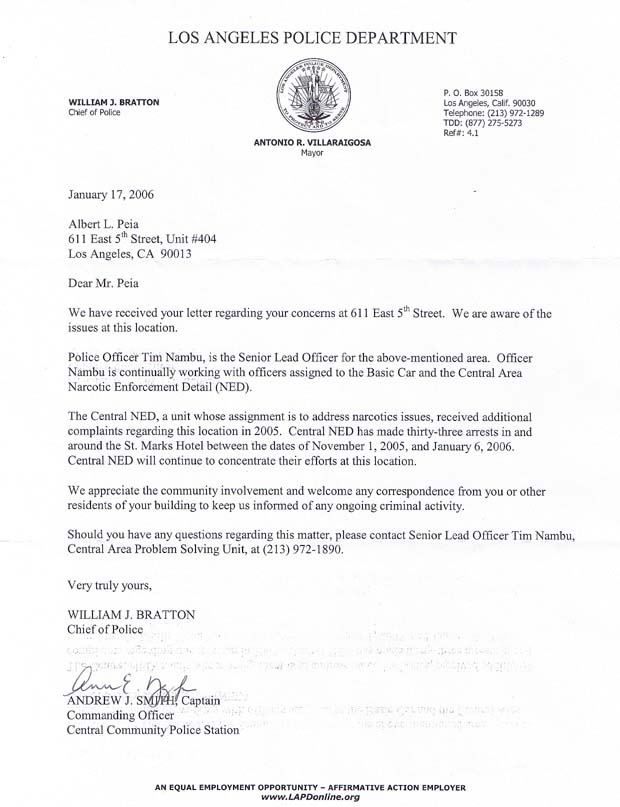
Letter To Local Police With Documents Regarding Criminal Referral Of RICO Crimes In Accordance With Federal District Court Order - Delivered By Hand ,
The ADDENDUM ,
The Declaration/Certification ,
,
RESPONSE AND SUPPLEMENTAL PROFFER IN SUPPORT OF PLAINTIFF'S CROSS-MOTION FOR ENTRY OF JUDGMENT ON THE PLEADINGS IN THE SUM CERTAIN AMOUNT OF $5 MILLION DEMANDED IN THE VERIFIED COMPLAINT. ) despite statements as, ie., "nobody is above the law" which obviously don't ring true. I wonder what FBI Agent Barndollar (sent documents) is thinking]. Polling suggests the people trust neither republicans (11% approval)
nor democrats (15%) with 73% saying there's little difference (note democrat senate minority leader harry reed refuses to return the abramoff money. What about u.s."top gun", "The Duke" - aptly played by mental case scientologist cruise). I wonder about the probably unanimous vote of a raise (congress) for jobs poorly done; ie., deficits, trade and budget, $2 trillion price tag on the illegal, criminal war in Iraq (including prospective vet.admin. payouts, etc.), etc. That $21.5 billion in bonuses (plus profits, costs, expenses, salaries, etc.) to the wall street frauds (that money) has to come from some place [Only A Small Fraction Of What wall street Does Is A Net Positive For The Economy (New Investment Capital), The Rest Is Tantamount To A (Economically) "Wasteful Tax" (On The Economy) via 'churn and earn' computerized programmed trades]. Note the
suckers' market rally to suck them in in january, 2006 (for the supertitious "january effect"), despite the reality of this secular bear market, the end of the bull cycle therein, and half the corporate profits in coming year 2006 (as compared to 2005), with 2005 sustained by unsustainable deficit spending, etc., and now, as in final pre-election result push
for bush (mid-terms 2006), which fell very short, but has provided the same pump-priming of the
market as most recently in 1999 which ended quite badly even without the
exacerbating effects of huge unsustainable and debilitating debt/deficits
deferring/prolonging the inevitable reality even as entire domestic u.s. industries are
rendered defunct and with corporate welfare unwisely spent (war crimes, etc.). However, this latest "california/la distraction" requires elucidation as follows:
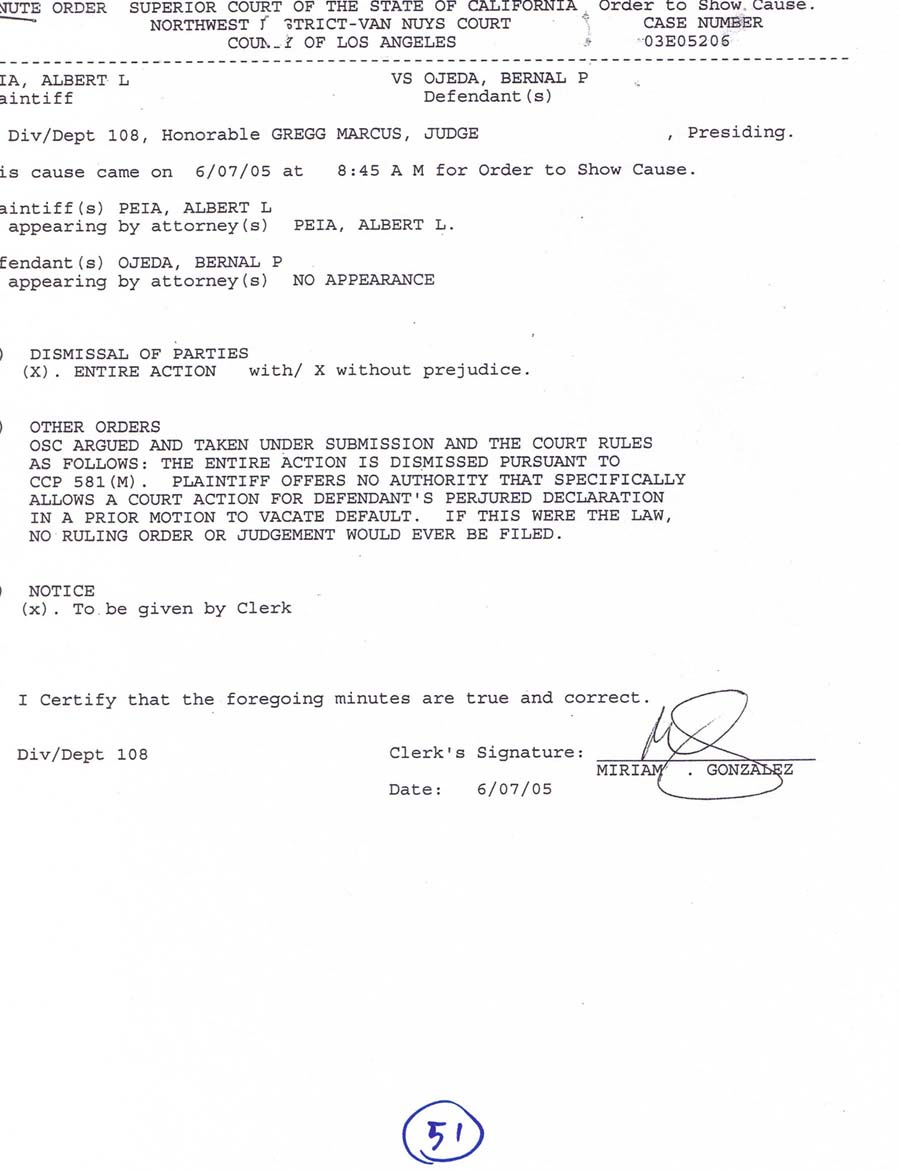
How embarrassing for the superior court of the state of california! 2007: Little glamour in L.A., 'gang capital of America'...With All the Talk and Focus on "Homeland Security", the Fact is that California is the Lawless 'Homieland' (negroe, hispanic gangs/criminals, radical jews/criminals(ie., irv rubin, etc.), that is Neither Fit for Life, Investment, Nor Business (new jersey and other parts of the northeast are similarly bad). California, like the aforesaid denizens, is obscene; that is, utterly without redeeming social value (legal definition). Rational people would be crazy to come and stay in this diseased, mismanaged, lawless and home to the uncivilized, "bubble/bubba/b**l s**t" state (the california, among other numerous states real estate bubble)Dateline: 11-22-02 - A New Distinction for Los Angeles: 'Murder Capital of the Nation' (In light of that set forth herein, how could they not have seen that coming? LAPD Chief Bratton has described this disgusting california scenario as worse than any crime scenario he has ever seen in his life)3-3-06: The gangs (ie., negroe, hispanic) are using molotov cocktails, automatic weapons, etc., in ie., Compton, CA, etc.. They actually segregate prisoners in prisons for prisoner safety. Law abiding people outside the prisons should be so lucky! That little incompetent macaque/brown monkey villagairosa (former gang member who failed the bar exam 4 times before giving up) keeps pushing for a takeover of the school district when everyone knows that the dumb sp**ks can't understand a word the teachers are saying, and he still is afraid of the "illegal alien" word that has added to crime and strained resources beyond limit, etc.. Can you believe that they even railed at police in pursuit of hispanic felons for not warning in spanish.
MENU TITLE: Gang Crime Recordkeeping
Series: NIJ Research in Brief
Published: June 1994 (NCJ 148345)
20 pages
Gang Crime and Law Enforcement Recordkeeping
by G. David Curry, Richard A. Ball, and Robert J.
Fox
-------------------
EXCERPT
'Of the police departments reporting gang crime
problems, almost all said they recorded the race or
ethnicity of gang members. As with other types of
data noted above, there was a difference between
recording information and being able to report that
information in summary form. Of the 72 large city
police departments reporting gang crime problems,
only 25 (35 percent) provided statistics on the
ethnicity of identified gang members; of the 38
smaller cities, only 12 (32 percent) provided
statistics on ethnicity. The ethnic
composition of gang members in these cities
remains predominantly black (48 percent) and
Hispanic (43 percent). The black groups were made
up primarily of African-Americans but also included
Jamaicans and blacks of other countries.' |
Post a Comment on the Blog
Post a Comment on the Blog
|
Lest We Forget This is #33 in AMEU?s Public Affairs Series Americans for Middle East Understanding March, 2006 Many of the events catalogued here have beentreated in depth in AMEU's
bimonthly publication, The Link. website: www.ameu.org . Lest We Forget The Israeli lobby in
Washington has successfully influenced the U.S. Congress to
give billions of non- -repayable dollars each
year to Israel on the premise that Israel?s loyalty
and strategic importance to the United States make
it an ally worthy of such unprecedented consideration. Is it? In his Farewell
Address, George Washington warned Americans to avoid a
passionate attachment to any one nation because it
promotes "the illusion of an imaginary common
interest in cases where no real common interest
exists." In 1948, U.S. Secretary
of Defense James Forrestal, an opponent of the
creation of a Jewish state in Palestine, warned that, even
though failure to go along with the Zionists might
cost President Truman the states of New York,
Pennsylvania, and California, ?it was about time that
somebody should pay some consideration to
whether we might not lose the United States.? Israeli actions over
the past 53 years involving U.S. interests in the Middle
East seriously challenge the "strategic
asset" premise of the Israeli lobby. Some of these actions are
compiled in the list that follows: September 1953: Israel illegally begins to divert
the waters of the Jordan River. President
Eisenhower, enraged, suspends all economic aid to Israel and
prepares to remove the taxdeductible status of the United Jewish Appeal
and of other Zionist organizations in the United
States. October 1953: Israel raids the West Bank village
of Kibya, killing 53 Palestinian civilians.
The Eisenhower administration calls the raid
"shocking," and confirms the suspension of aid to Israel. July 1954: Israeli agents firebomb American
and British cultural centers in Egypt, making it look
like the work of the Egyptian Muslim Brotherhood in
order to sabotage U.S.- -Egyptian relations. October 1956: Israel secretly joins with England
and France in a colonial‑style attack on Egypt?s Suez
Canal. Calling the invasion a dangerous threat to
international order, President Eisenhower forces Israel to
relinquish most of the land it had seized. 1965: 206 pounds of weapons grade
uranium disappear from the Nuclear Materials and
Equipment Corporation plant in Pennsylvania. Plant president is
Zalmon Shapiro, a former sales agent for the Israel Defense
Ministry. C.I.A. Director Richard Helms later charges that
Israel stole the uranium. June 1967: Israel bombs, napalms and
torpedoes the USS Liberty, killing 34 Americans,
wounding 171 others, and nearly sinking the lightly armed
intelligence ship. The Chairman of the Joint Chiefs of Staff, Admiral
Thomas Moorer, charges that the attack "could not possibly
have been a case of mistaken identity." June 1967: Against U.S. wishes Israel seizes
and occupies Syria's Golan Heights. June 1968: Israeli Prime Minister Golda Meir
rejects U.S. Secretary of State William Rogers? Peace
Plan that would have required Israel to withdraw from the
occupied territories; she calls upon Jews everywhere to
denounce the plan. March 1978: Israel invades Lebanon, illegally
using U.S. cluster bombs and other U.S. weapons given
to Israel for defensive purposes only. 1979: Israel frustrates U.S.‑sponsored Camp David Accords by building new settlements on the
West Bank. President Carter complains to American
Jewish leaders that, by acting in a "completely irresponsible
way," Israel's Prime Minister Begin continues "to disavow the basic
principles of the accords." 1979: Israel sells U.S. airplane tires
and other military supplies to Iran, against U.S. policy, at a
time when U.S. diplomats are being held hostage in Teheran. July 1980: Israel annexes East Jerusalem in
defiance of U.S. wishes and world opinion. July 1981: Illegally using U.S. cluster bombs
and other equipment, Israel bombs P.L.O. sites in
Beirut, with great loss of civilian life. December 1981: Israel annexes Syria's Golan
Heights, in violation of the Geneva Convention and in
defiance of U.S. wishes. June 1982: Israel invades Lebanon a second
time, again using U.S. cluster bombs and other U.S.
weapons. President Reagan calls for a halt of all
shipments of cluster bomb shells to Israel. September 1982: Abetted by Israeli forces under
the control of Defense Minister Ariel Sharon,
Lebanese militiamen massacre hundreds of Palestinians in
Beirut's Sabra and Shatila refugee camps. President Reagan is
?horrified? and summons the Israeli ambassador to demand
Israel's immediate withdrawal from Beirut. September 1982: Israeli Prime Minister Menachem
Begin rejects President Reagan's Peace Plan for
the occupied territories. January‑March 1983: Israeli army "harasses"
U.S. Marines in Lebanon. Defense Secretary
Caspar Weinberger confirms Marine commandant's report that
"Israeli troops are deliberately threatening the lives of American
military personnel . . . replete with verbal degradation of
the officers, their uniforms and country." March 1985: Israeli lobby in Washington
pressures the U.S. Congress to turn down a $1.6
billion arms sale to Jordan, costing the U.S. thousands of jobs, quite
apart from the financial loss to American industry. Jordan
gives the contract to Russia. A frustrated King Hussein
complains: "The U.S. is not free to move except within the limits of
what AIPAC [the Israeli lobby], the Zionists and the State
of Israel determine for it." October 1985: Israeli lobby blocks $4 billion
aircraft sale to Saudi Arabia. The sale, strongly
backed by the Reagan administration, costs the U.S. over 350,000 jobs,
with steep financial losses to American industry. Saudi
Arabia awards contract to England. November 1985: Jonathan Jay Pollard, an American
recruited by Israel, is arrested for passing
highly classified intelligence to Israel. U.S. officials call the
operation but "one link in an organized and well‑financed Israeli espionage ring
operating within the United States."
State Department contacts reveal that top Israeli defense officials
"traded stolen U.S. intelligence documents to Soviet military
intelligence agents in return for assurances of greater emigration
of Soviet Jews." December 1985: U.S. Customs in three states raid
factories suspected of illegally selling
electroplating technology to Israel. Richard Smyth, a NATO consultant
and former U.S. exporter, is indicted on charges of illegally
exporting to Israel 800 krytron devices for triggering nuclear
explosions. April 1986: U.S. authorities arrest 17
persons, including a retired Israeli General, Avraham Bar‑Am, for plotting to sell more than $2 billion of advanced
U.S. weaponry to Iran (much of it already in Israel). General
Bar‑Am, claiming to have had Israeli Government approval,
threatens to name names at the highest levels. U.S. Attorney
General of New York calls the plot mind-boggling in scope. July 1986: Assistant Secretary of State
Richard Murphy informs the Israeli ambassador that a U.S.
investigation is under way of eight Israeli
representatives in the U.S. accused of plotting the illegal export of
technology used in making cluster bombs. Indictments against the
eight are later dropped in exchange for an Israeli promise to
cooperate in the case. January 1987: Israeli Defense Minister Yitzhak
Rabin visits South Africa to discuss joint
nuclear weapons testing. Israel admits that, in violation of a
U.S. Senate anti‑apartheid bill, it has arms sales contracts with
South Africa worth hundreds of millions of dollars. Rep. John
Conyers calls for Congressional hearings on Israel‑South Africa nuclear testing. November 1987: The Iran‑Contra scandal reveals that it was Israel that had first proposed the
trade to Iran of U.S. arms for hostages. The scandal becomes the
subject of the Tower Commission Report, Senate and House
investigations, and the Walsh criminal prosecution
inquiries. April 1988: Testifying before U.S.
Subcommittee on Narcotics, Terrorism and International
Operations, Jose Blandon, a former intelligence aide to
Panama's General Noriega, reveals that Israel used $20 million of
U.S. aid to ship arms via Panama to Nicaraguan Contras. The empty
planes then smuggled cocaine via Panama into the United
States. Pilot tells ABC reporter Richard Threlkeld that Israel was
his primary employer. The arms‑for‑drugs network is said to be led by
Mike Harari, Noriega's close aide and
bodyguard, who was also a high officer in the Israeli secret services and
chief coordinator of Israel's military and commercial business
in Panama. June 1988: Mubarak Awad, a Palestinian-American
advocate of nonviolence, is deported by
Israel. The White House denounces the action, saying, "We think
it is unjustifiable to deny Mr. Awad the right to stay and
live in Jerusalem, where he was born." June 1988: Amnesty International accuses
Israel of throwing deadly, U.S.-made gas canisters
inside hospitals, mosques, and private homes. The
Pennsylvania manufacturer, a major defense corporation, suspends
future shipments of tear gas to Israel. November 1989: According to the Israeli paper
Maariv, U.S. officials claim Israel Aircraft
Industries was involved in attempts to smuggle U.S. missile navigation
equipment to South Africa in violation of U.S. law. December 1989: While the U.S. was imposing
economic sanctions on Iran, Israel purchased
$36 million of Iranian oil in order to encourage Iran to help
free three Israeli hostages in Lebanon. March 1990: Israel requests more than $1
billion in loans, gifts, and donations from American
Jews and U.S. government to pay for resettling Soviet Jews
in occupied territories. President Bush responds, My position is
that the foreign policy of the U.S. says we do not believe
there should be new settlements in the West Bank or East
Jerusalem.? June 1990: Officials in the Bush
administration and in Congress say that Israel has emerged as
leading supplier of advanced military technology to China,
despite U.S.'s expressed opposition to Israeli-Chinese
military cooperation. September 1990: Israeli Foreign Minister David
Levy asks the Bush administration to forgive
Israel?s $4.5 billion military debt and dramatically increase military
aid. Israeli Defense Minister Moshe Arens expresses concern over
expected $20 billion in U.S. arms sales to Saudi Arabia
and asks for an additional $1 billion in military aid to Israel.
Facing rising congressional opposition, White House backs off from plan to
sell Saudi Arabia over $20 billion in military
hardware. Bush administration promises to deliver additional
F-15 fighters and Patriot missiles to Israel, but defers action on
Israel?s request for more than $1 billion in new military aid.
Arens questions U.S.'s commitment to maintain Israel?s military
advantage in the Middle East. October 1990: Aliya cabinet chair Ariel Sharon
encourages increase in settlement of Soviet
Jews in East Jerusalem, despite his government?s assurances to the
U.S. that it would not do so. Bush sends personal letter
to Prime Minister Shamir urging Israel not to pursue East
Jerusalem housing. Shamir rejects appeal. November 1990: In his new autobiography, former
President Reagan says Israel was the
instigator and prime mover in the Iran-Contra affair and that
then-Prime Minister Shimon Peres was behind the proposal. January 1991: White House criticizes Israeli
ambassador Zalman Shoval for complaining that U.S.
had not moved forward on $400 million in loan guarantees
and that Israel had not received one cent in aid from
allies to compensate for missile damage (in Gulf War). U.S. says
comments are outrageous and outside the bounds of
acceptable behavior. February 1991: Hours after long-disputed $400
million loan guarantees to Israel are approved,
Israeli officials say the amount is grossly insufficient.
Next day, Israel formally requests $1 billion in emergency military
assistance to cover costs stemming from the Gulf War. March 1991: Israeli government rejects
President Bush?s call for solution to Arab-Israeli
conflict that includes trading land for peace. In a report to
Congress, U.S. State Department says Soviet Jewish immigrants are
settling in the occupied territories at a higher rate than the Israeli
government claims. During tour of West Bank settlements,
Housing Minister Sharon says construction of 13,000
housing units in occupied territories has been approved for next two
years. Plans contradict statement by Prime Minister
Shamir, who told President Bush that the Israeli government had
not approved such plans. April 1991: Prime Minister Shamir and several
members of his cabinet reject U.S. Secretary of
State Baker?s suggestion that Israel curtail expansion of Jewish
settlements in the occupied territories as gesture for peace.
U.S. calls new Jewish settlement of Revava an obstacle to peace
and questions Israel's timing, with Secretary Baker due
to arrive in Israel in two days. Hours before Baker arrives,
eight Israeli families complete move to new settlement of Talmon
Bet. U.S. ambassador to Israel William Brown files an
official protest with the Israeli government about establishment
and/or expansion of settlements in the West Bank. Housing Minister
Sharon says Israel has no intention of meeting U.S.
demands to slow or stop settlements. Secretary Baker, in a news
conference before leaving Israel, says Israel failed to give
responses he needed to put together a peace conference. May 1991: Israeli ambassador to U.S. Zalman
Shoval says his country will soon request $10
billion in loan guarantees from Washington to aid in settling
Soviet Jewish immigrants to Israel. Secretary Baker calls continued
building of Israeli settlements ?largest obstacle? to convening
proposed Middle East peace conference. May 1991: President Bush unveils proposal
for arms control in Middle East. U.S. administration
confirms that Israel, which has not signed the Nuclear
Non-Proliferation Treaty, has objected to provision on nuclear weapons. June 1991: Prime Minister Shamir rejects
President Bush?s call for Israeli acceptance of a
greater United Nations? role in proposed Arab-Israeli peace talks. July 1991: Israeli Housing Minister Sharon
inaugurates the new Israeli settlement of Mevo
Dotan in the West Bank one day after President Bush describes
Israeli settlements as ?counterproductive.? September 1991: President Bush asks Congress to
delay considering Israeli loan guarantee
request for 120 days. Ignoring pleas of U.S. administration,
Israel formally submits its request. Prime Minister Shamir says U.S.
has a ?moral obligation? to provide Israel with loan
guarantees, and that Israel would continue to build
settlements in the occupied territories. October 1991: The Washington Post reports that
President Bush waived U.S.-mandated
sanctions against Israel after U.S. intelligence determined that
Israel had exported missile components to South Africa. November 1991: Hours after concluding bilateral
talks with Syria, Israel inaugurates Qela, a
new settlement in the Golan Heights. Secretary of State Baker
calls the action provocative. February 1992: Secretary of State Baker says U.S.
will not provide loan guarantees to Israel
unless it ceases its settlement activity. President Bush threatens
to veto any loan guarantees to Israel without a freeze on
Israel's settlement activity. March 1992: U.S. administration confirms it
has begun investigating intelligence reports that Israel
supplied China with technical data from U.S. Patriot
missile system. April 1992: State Department Inspector issues
report that the department has failed to heed
intelligence reports that an important U.S. ally widely understood to
be Israel was making unauthorized transfers of U.S.
military technology to China, South Africa, Chile, and Ethiopia. May 1992: Wall Street Journal cites Israeli
press reports that U.S. officials have placed Israel
on list of 20 nations carrying out espionage against U.S.
companies. June 1992: U.S. Defense Department says
Israel has rejected a U.S. request to question former
General Rami Dotan, who is at center of arms procurement
scandal involving U.S. contractors. July 1992: General Electric Company pleads
guilty to fraud and corrupt business practices in
connection with its sale of military jet engines to Israel. A
GE manager had conspired with Israeli Gen. Rami Dotan to
divert $27 million in U.S. military aid with fraudulent vouchers. U.S.
Justice and Defense Departments do not believe that
Dotan was acting in his own interest, implying that the
government of Israel may be implicated in the fraud, which would
constitute a default on Israel's aid agreements with the U.S. June 1993: U.S. House of Representatives
passes bill authorizing $80 million per year to Israel for
refugee settlement; bill passes despite $10 billion in U.S.
loan guarantees to Israel and against evidence from Israeli
economists that Israel no longer needs U.S. aid. October 1993: CIA informs Senate Government
Affairs Committee that Israel has been providing
China for over a decade with ?several billion dollars?
worth of advanced military technology. Israeli Prime Minister Rabin
admits Israel has sold arms to China. November 1993: CIA Director James Woolsey makes
first public U.S. acknowledgement that
?Israel is generally regarded as having some kind of nuclear
capability.? December 1993: Time magazine reports convicted
spy Jonathan Pollard passed a National Security
Agency listing of foreign intelligence frequencies to Israel
that later was received by Soviets, ruining several
billion dollars of work and compromising lives of U.S. informants. December 1994: Los Angeles Times reports Israel
has given China information on U.S. military
technology to help in joint Israeli-Chinese development of a
fighter jet. January 1995: When Egypt threatens not to sign
the Nuclear Non-Proliferation Treaty because
Israel will not sign, the U.S. says it will not pressure Israel
to sign. July 1995: U.S. Ambassador to Israel Martin
Indyk demands Israel abolish import barriers
that discriminate against U.S. imports. November 1995: Israel grants citizenship to
American spy Jonathan Pollard. April 1996: Using U.S.-supplied shells, Israel
kills 106 unarmed civilians who had taken refuge in
a U.N. peace-keeping compound in Qana, southern
Lebanon. U.N. investigators, Amnesty International, and Human
Rights Watch condemn the shelling as premeditated. The U.N.
Security Council calls on Israel to pay reparations.
Resolution is vetoed by the United States. June 1996: U.S. State Department hands
Israeli defense officials classified CIA report alleging
Israel has given China U.S. military avionics, including
advanced radar-detection system and electronic warfare equipment. December 1996: Israeli cabinet reinstates large
subsidies, including tax breaks and business
grants, for West Bank settlers. U.S. says the move is ?troubling?
and ?clearly complicates the peace process.? Israeli
government rejects President Clinton's criticism of the
settlements and vows to strengthen them. February 1997: FBI announces that David
Tenenbaum, a mechanical engineer working for the U.S.
army, has admitted that for the past 10 years he has
?inadvertently? passed on classified military information to Israeli
officials. March 1997: U.S. presses Israel to delay
building new settlement of Har Homa near Bethlehem. Prime
Minister Netanyahu says international opposition
?will just strengthen my resolve.? June 1997: U.S. investigators report that two
Hasidic Jews from New York, suspected of
laundering huge quantities of drug money for a Colombian drug
cartel, recently purchased millions of dollars worth of land
near the settlements of Mahseya and Zanoah. September 1997: Jewish settlers in Hebron stone
Palestinian laborers working on a
U.S.-financed project to renovate the town?s main street. David
Muirhead, the American overseeing the project, says the Israeli
police beat him, threw him into a van, and detained him until the
U.S. Consulate intervened. U.S. State Department calls the
incident ?simply unacceptable.? September 1997: Secretary of State Albright says
Israel's decision to expand Efrat
settlement is not at all helpful to the peace process. Prime Minister
Netanyahu says he will continue to expand settlements. May 1998: 13 years after denying he was not
its spy, Israel officially recognizes Pollard as
its agent in hopes of negotiating his release. June 1998: Secretary of State Albright phones
Prime Minister Netanyahu to condemn his plan to
extend Jerusalem?s municipal boundaries and to move Jews into
East Jerusalem, particularly in the area adjacent to Bethlehem.
Ignoring U.S. protests, Israel?s cabinet unanimously
approves plan to extend Jerusalem?s municipal authority. August 1998: Secretary Albright tells Prime
Minister Netanyahu that the freeze in the
peace process due to the settlement policy is harming U.S. interests
in the Middle East and affecting the U.S.?s ability to
forge a coalition against Iraq. September 1998: Dutch newspaper NRC Handelsblad
reports that the Israeli airliner that
crashed in Amsterdam in 1992 was not carrying ?gifts and perfume,?
as the Israelis claimed, but three of the four chemicals used
to make sarin nerve gas. According to the plane?s cargo manifest, the
chemicals were sent from a U.S. factory in
Pennsylvania to the top secret Israeli Institute for Biological Research. November 1998: Israeli Foreign Minister Sharon
urges Jewish settlers to grab West Bank land
so it does not fall under Palestinian control in any final peace
settlement. May 1999: U.S. denounces Israel's decision
to annex more land to the Ma?ale Adumim
settlement. June 1999: The Israeli company Orlil is
reported to have stolen U.S. night-vision equipment
purchased for the Israeli Defense Forces and to have sold it to ?Far
Eastern? countries. April 2001: Prime Minister Sharon announces plans
to build 708 new housing units in the
Jewish settlements of Ma'ale Adumim and Alfe Menashe. U.S. State
Department criticizes the move as ?provocative.? May 2001: The Mitchell Committee (headed by
former U.S. Senator George Mitchell) concludes
that Jewish settlements are a barrier to peace. Prime
Minister Sharon vows to continue expanding the settlements. May 2001: U.S. is voted off the United
Nations Commission on Human Rights for the first time
since the committee?s establishment in 1947. The Financial Times of
London suggests that Washington, by vetoing U.N.
resolutions alleging Israeli human rights abuses, showed its
inability to work impartially in the area of human rights.
Secretary of State Colin Powell suggests the vote was because we left a
little blood on the floor in votes involving the
Palestinians. September 2001: Six days after the 9/11 terrorist
attacks on America, Secretary of State
Powell, when asked why America is hated in the Arab and Muslim
world, acknowledges that the deep resentment and anger toward
the United States is due to the Palestinian crisis. November 2001: Secretary of State Colin Powell
calls on Israel to halt all settlement building
which he says cripples chances for real peace and
security. Benny Elon, a right-wing minister in the Sharon government,
says the settlers aren?t worried. ?America has a special
talent for seeing things in the short term,? he says, explaining
that what Powell said he said only to get Arab support for
America?s anti-terrorism coalition against Afghanistan. March 2002: U.N. Sec. Gen. Kofi Annan calls
for immediate withdrawal of Israeli tanks from
Palestinian refugee camps, citing large numbers of
Palestinians reported dead or injured. U.S. State Dept. says the United
States has contacted Israel to urge that utmost restraint be
exercised in order to avoid harm to the civilian population. April 2002: President Bush repeatedly demands
an immediate halt to Israel's military invasion
of the West Bank. Prime Minister Sharon rebuffs the President?s withdrawal
demands, saying the United States and other
nations should not put any pressure upon us. April 4, 2002: President Bush demands that Israel
halt its March 29 incursion into the West
Bank, withdraw immediately, and cease all settlement building.
Three days later, Secretary of State Powell says Bush?s
?demand? was a ?request.? June 10, 2002: Prime Minister Sharon visits White
House. When reporters ask about Israel?s
ongoing incursions into Palestinian towns, President Bush says Israel
has a right to defend herself. September 30, 2003: President Bush signs the Foreign
Relations Authorization Act, which
identifies Jerusalem as Israel's capital. November 25, 2002. Israel asks the U.S. for
$4-billion in military aid to ?defray the costs
of fighting terrorism,? plus $10-billion in loan guarantees to
support its struggling economy. May 29, 2003: Israel announces construction of a
new Jewish settlement of 230 housing units in
East Jerusalem. July 29, 2003: Sharon rejects President Bush?s
appeal to halt construction of a separation wall
that Israel is building on occupied Palestinian land. October 22, 2003: Former Navy lawyer Ward Boston,
who had helped lead the military
investigation into Israel's 1967 attack on the USS Liberty, files a
signed affidavit stating that President Johnson and Secretary of
Defense Robert McNamara had ordered those heading the
naval inquiry to conclude that the attack was a case of mistaken
identity, despite overwhelming evidence to the contrary. March 21, 2005: Prime Minister Sharon approves
construction of 3,500 new housing units in the
Israeli settlement of Ma'ale Adumin to link it to East
Jerusalem. The U.S. State Department has no comment. May 2005: Newsweek reports that in the late
1990s, lobbyist Jack Abramoff diverted more than
$140,000 from charity contributions by Indian tribes to the Israeli
settlement of Beitar Illit for sniper equipment and
training of settler militias. AMEU Board of Directors Jane Adas (Vice President) Hugh D. Auchincloss, Jr. Atwater, Bradley & Partners,
Inc. Edward Dillon John Goelet Richard Hobson, Jr. Anne R. Joyce Kendall Landis (Treasurer) Robert L. Norberg (President) Hon. Edward L. Peck Former U.S. Ambassador Lachlan Reed President, Lachlan International Talcott W. Seelye Former U.S. Ambassador to Syria Donald L. Snook James M. Wall AMEU National Council Hon. James E. Akins Isabelle Bacon William R. Chandler David S. Dodge Paul Findley Dr. Cornelius B. Houk Cynthia Infantino O. Kelly Ingram Moorhead Kennedy Ann Kerr John J. McCloy II David Nes Mary Norton C. Herbert Oliver Marie Petersen Dr. John C. Trever Don M. Wagner Miriam Ward, RSM AMEU Executive Director: John
F. Mahoney AMEU grants permission to reproduce
?Lest We Forget? in part or in whole. AMEU must be credited and one copy
forwarded to our offices at 475 Riverside Drive, Room 245, New York, New York
10115-0245. Telephone: 212- 870-2053; E-mail: AMEU@aol.com;
website: www.ameu.org. |
|
October 24, 2005
Issue |
|
|
|
|
|
|
|
|
|
|
|
|
|
|
|
|
|
|
|
|
|
|
|
 Europe Daily Slide Show
 The News Files
 Financial Lunacy 2006